
Different Types of Oil Drilling Processes
There are several types of oil drilling processes, including:
Vertical drilling: This is the most traditional method of drilling for oil. A vertical well is drilled straight down into the earth to reach the oil deposit. This method is typically used for shallower oil deposits or for drilling into a specific layer of rock.
Horizontal drilling: This method involves drilling a well at an angle, typically between 80 and 90 degrees, to reach a specific layer of rock. Horizontal drilling is used to access oil deposits that are not located directly underneath the surface.
Directional drilling: This method is a combination of vertical and horizontal drilling. A well is drilled vertically to a certain point, then turns and drills horizontally to reach the oil deposit. This method is used to access oil deposits that are not located directly underneath the surface or to drill around obstacles.
Offshore drilling: This method involves drilling for oil in the ocean. Offshore drilling typically takes place in deep waters, and the wells are drilled from platforms or ships.
Fracking: This is also known as hydraulic fracturing, and commonly used to extract oil and gas from shale rock. This method involves injecting a mixture of water, sand, and chemicals into the ground at high pressure to fracture the rock and release the oil and gas.
Basic Oil Drilling Equipment
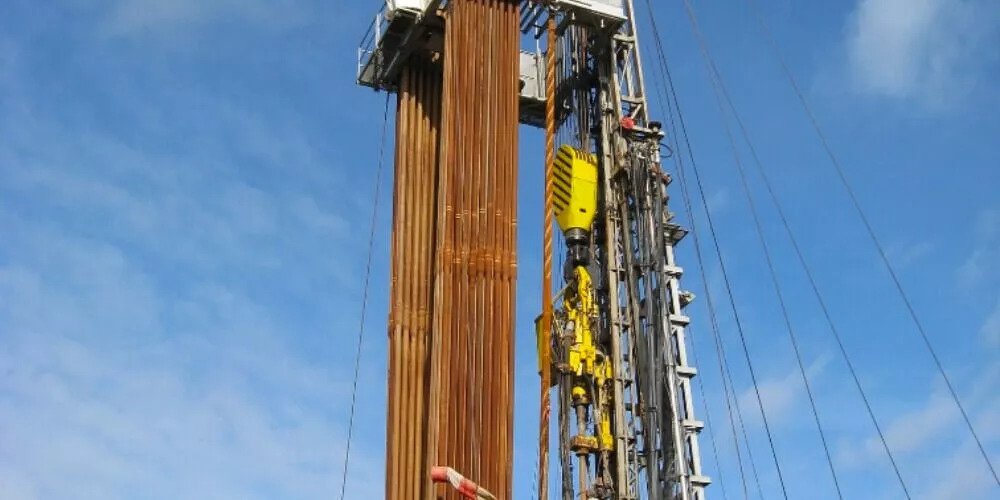
An oil rig is an essential onshore and offshore drilling tool. This large tool has many moving parts, with each having distinct functions in extracting oil and gas from the earth’s crust safely.
Below are the various types of drilling equipment used in extracting oil.
Drill bit: The drill bit is the cutting tool at the bottom of the drill string that cuts into the rock to create the borehole.
Drill pipe: The drill pipe is the long, hollow tube that connects the surface equipment to the drill bit and is used to pump drilling fluid to the bit.
Drill collar: The drill collar is a thick-walled, heavy piece of pipe located above the drill bit that helps to maintain the weight on the bit and prevent the drill pipe from bending.
Rotary table: A large circular mechanical device that is used to rotate the drill string and provide the necessary torque to turn the drill bit.
Kelly: The kelly is a square or hexagonal piece of pipe that is used to connect the drill pipe to the swivel and rotates with the drill pipe to turn the bit.
Swivel: The swivel connects the kelly to the drilling line and allows the drill pipe to rotate while the drilling line stays stationary.
Drilling line: The drilling line is the cable or rope that is used to raise and lower the drill pipe and other equipment in the hole.
Sand pump: Address the need to move sand and other slurries away from the drilling site. It helps to do the work of manual labor.
Mud pump: The mud pump is used to pump drilling fluid (or “mud”) down the drill pipe and out of the drill bit, helping to cool and lubricate the bit and carry cuttings to the surface.
Mud tank: The mud tank is used to store and mix the drilling fluid that is used in the drilling process.
Degasser: A device that separates air and gas from the drilling fluid. It’s placed at the top of the mud tank.
Shale shaker: An oil well drilling equipment that removes the mud from the cuttings to separate the oil from slurries.
Derrick: Also known as the drill mast. It’s the large, vertical structure that supports the drilling line and other equipment at the surface.
Top drive: A mechanical device that is used to rotate the drill string and apply weight to the drill bit. It’s mounted on the derrick above the rotary table.
Blowout preventer (BOP): The BOP is a large, specialized valve that sits on top of the wellhead and is used to control the pressure in the well and prevent a blowout (an uncontrolled release of pressurized fluids).